Software & Industrial Engineering

Complex inside.
Simple outside.

Imbra is an engineering-led company helping industrial plants, device manufacturers, protocol vendors and automation teams solve the software between the plant floor and IT. We build, test, integrate, and support protocol stacks, data flows, historians, and legacy systems — with direct access to the founder.
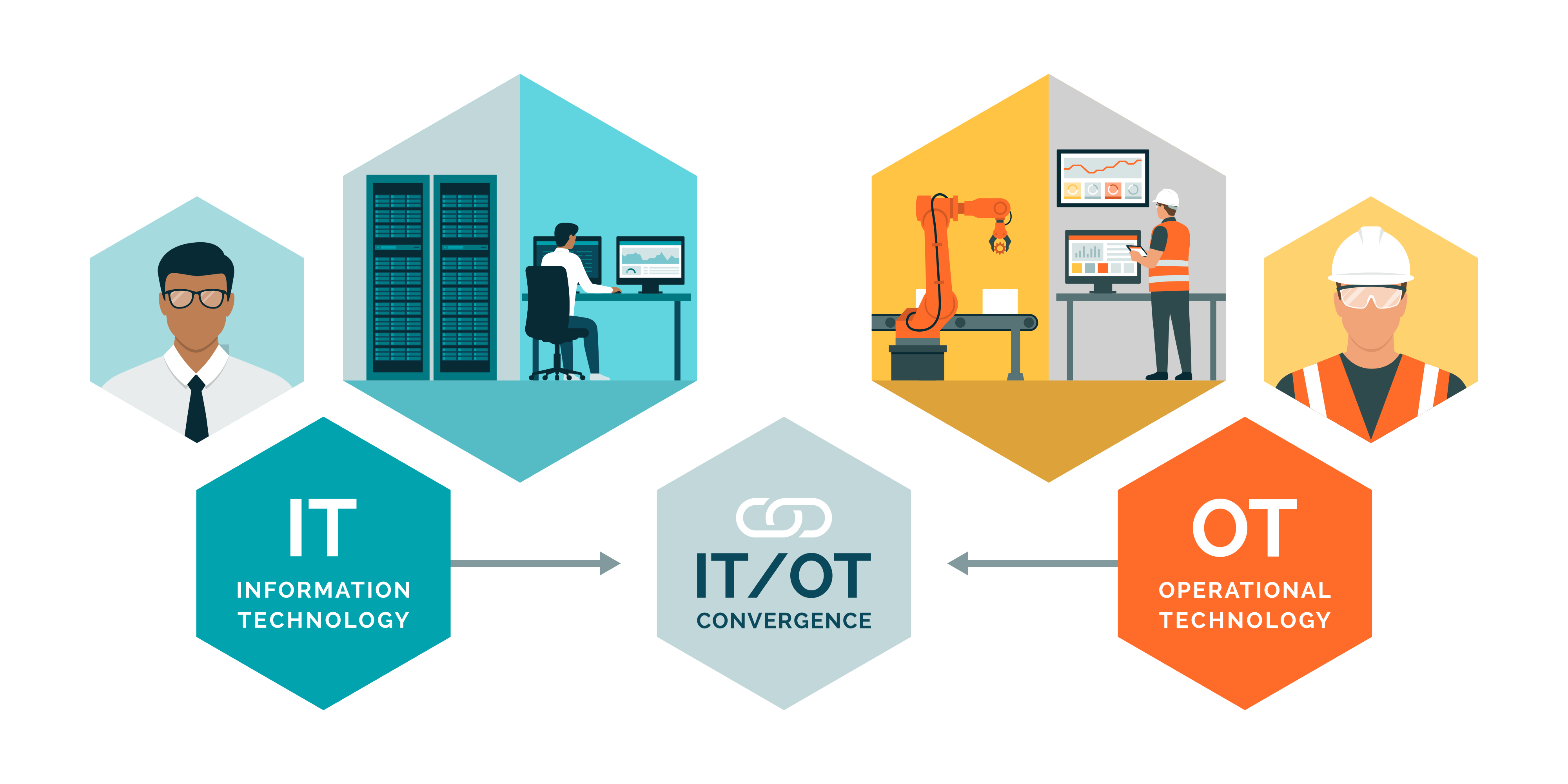
OT/IT integration diagram

What we fix, build, and keep running

Expand a service: the problem, what we do about it, and where we have done it before.

Industrial Communication & Testing

Protocol stacks, device communication, emulators and test tooling for the software that talks to industrial devices.

01

You need software that talks to your devices — a protocol library, a device emulator, an API that gives IT a clean view of the plant floor — and the off-the-shelf options are incomplete, unmaintained, or wrong for your hardware.

02

You ship protocol stacks, firmware, or communication software and need proof that it behaves — under the specification, and under the malformed traffic real networks produce.

OT/IT Integration

PLC software and the data paths that connect PLCs, SCADA and laboratory systems to IT platforms.

03

Your process data sits in PLCs, SCADA alarms, and lab systems that were never meant to talk to each other.

04

Your control logic needs to move, change, or be made consistent — a Honeywell strategy ported to Siemens, a PLC program nobody dares to modify, PID loops that were never tuned properly.

Historization & Data Infrastructure

Historians, legacy modernisation and the long-term operation of the systems that hold plant data.

05

You have a system that works and that nobody dares to change: the original developer has left, there are no tests, and every fix risks breaking something else.

06

A system your plant depends on — a historian, communication software, a legacy application — misbehaves, the vendor and the integrator point at each other, and your team is out of depth.

From first contact to long-term support.

Every engagement follows the same four steps. You always know which one you are in, what comes next, and what it costs.

  1. 01

    Assess

    A free conversation about your needs, goals, constraints and working expectations helps both sides decide whether to work together, without obligation.

  2. 02

    Agree

    Choose hourly support with reserved capacity or fixed-price project delivery. Any technical investigation has its scope, deliverables, time limit and price agreed before it starts; delivery terms are then agreed in a Statement of Work.

  3. 03

    Deliver

    Work runs in short cycles with written progress reports; architecture is documented as it is decided, and nothing is done until you sign off.

  4. 04

    Support

    After go-live, committed hours cover escalation support and further work, at a rate set by how long you commit.

AI-assisted engineering, human accountability.

AI tools are part of how we deliver, not a service we sell. What we think shapes how we work. What we commit to holds on every engagement.

What we think

  • Working software is the measure of progress.

    Progress is software that runs and passes its tests, not hours spent.

  • Understand the whole system before changing it.

    A fix in one layer can break another, so we follow the data from the device to the IT platform first.

  • Price the uncertainty before committing to it.

    When the risk is unknown, a short paid investigation comes before a fixed price.

  • Documentation is part of the system.

    Industrial software outlives the people who wrote it; what is not written down leaves with them.

What we commit to

  • AI-assisted implementation and exploration

    We use AI tools to draft code, work through unfamiliar specifications and legacy sources, and try alternatives quickly, so working software reaches you sooner and more time goes into your system's edge cases.

  • Automated testing and documentation

    We produce tests and documentation with the code and keep them current as it changes, deriving test cases directly from product and protocol specifications.

  • Human review and your sign-off

    An engineer reviews every change and is accountable for it. Nothing is delivered until you have signed it off.

  • You own the result

    Source code, tests, architecture documentation and runbooks are yours and transferable. Another team can take over without us.

Something between the plant floor and IT
not working?

Tell us what is failing. The free assessment checks whether we are a good fit, without obligation. Any technical investigation is agreed and priced separately. Rates are on the pricing page.

Prefer email? contact@imbra.io